The Technique That Backfires
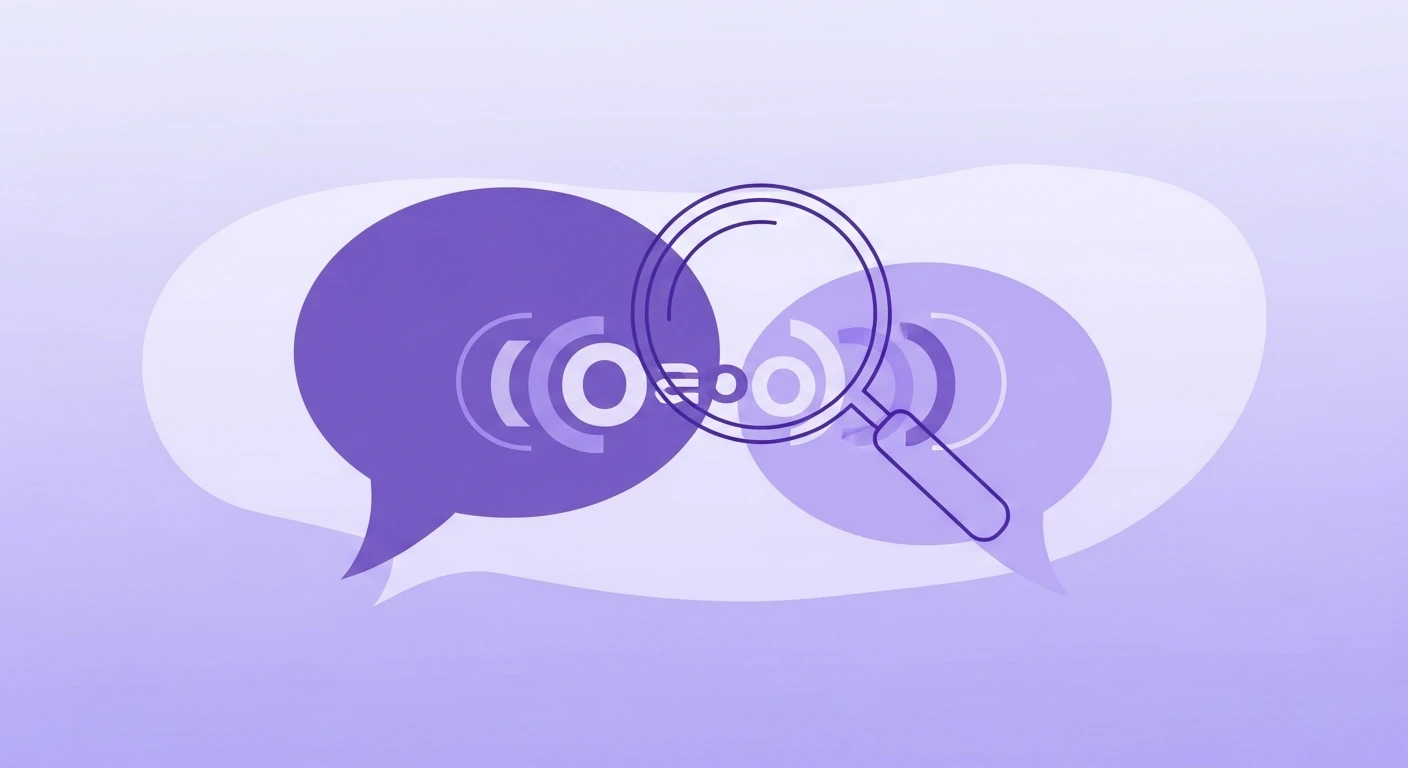
Every interviewer is taught to mirror. A participant says a word, you reflect it back, and the conversation flows -- they feel heard, rapport builds, and the transcript reads like a smooth collaboration. It is one of the first moves in the qualitative toolkit, and most of the time it works exactly as advertised. But there is a version of mirroring that quietly corrupts your data, and it hides inside the very behavior that looks most like good listening.
The problem is this: when you adopt a participant's word and use it back to them, you do not just acknowledge it -- you ratify it. You promote a casual, off-the-cuff phrasing into the official vocabulary of the session. From that point on, the participant reasons inside the term you both now share, and the alternative framings they might have reached for -- the ones that would have told you what they actually meant -- never surface. Mirroring feels neutral. It is not.
Why the First Word Is Rarely the Right Word
The first label a participant reaches for is almost never their most considered one. It is the fastest available word, pulled under mild social pressure to keep talking. Someone calls a feature "confusing" because that is the nearest term to hand, not because they have diagnosed the experience as genuinely confusing rather than, say, unfamiliar, mistrusted, or simply badly timed. Left alone, they might have circled back and refined it. This is the same articulation gap where users cannot cleanly explain their own behavior on the first pass -- the opening word is a rough draft, not a finding.
When you mirror that rough draft back -- "So what's confusing about it?" -- you have just told the participant that "confusing" is the accepted frame. Now they are answering a question built on their own least-examined word, and the whole downstream conversation inherits that framing. The refinement that would have happened never gets the chance.
Ratification Is a Form of Priming
Mirroring is priming that wears the costume of empathy. By repeating their term, you signal that it is correct, complete, and worth building on -- and participants, reading that signal, stop searching for better language. This is a close cousin of the priming contamination that embeds an interviewer's assumptions into questions participants cannot detect, except the contaminating assumption is the participant's own hasty one, now stamped with your authority.
It compounds across the session. Each mirrored term becomes a fixed point the rest of the conversation orbits. By the third or fourth reflection, you and the participant are speaking a shared dialect built entirely from their first-pass vocabulary -- fluent, agreeable, and narrower than the truth. The transcript will look coherent, which is exactly the danger: narrative coherence bias makes a smooth, internally consistent account feel more trustworthy than the messy reality it papered over.
What You Lose When Words Lock Early
The cost is not just imprecise language -- it is unexplored territory. When "confusing" gets ratified, you never learn that the participant actually meant "I didn't trust that it saved my work," which is a completely different product problem with a completely different fix. The mirrored word acts as a lid on the container of what the participant is willing to reconsider.
This matters most in exactly the moments researchers care about: the surprising, the emotional, the high-stakes. Those are the moments where the first word is most likely to be a placeholder and least likely to be examined -- and where a well-meaning mirror does the most damage by sealing the placeholder in place. It is the interviewing equivalent of the counting trap, where the theme that gets named most often gets mistaken for the theme that matters most.
How to Listen Closely Without Locking
The fix is not to stop reflecting -- it is to reflect the experience, not the label.
Mirror the situation, not the word. Instead of "What was confusing?" try "Walk me through what happened right before you felt stuck." You acknowledge their state without ratifying their diagnosis, and you invite a concrete episode rather than an abstract restatement -- the payoff behind the specificity gradient, where concrete questions unlock real experience and abstract ones produce performative answers.
Offer the word back as a question, not a fact. "You said confusing -- is that the right word, or is it something else?" gives explicit permission to revise. Naming the possibility of a better word is often all it takes for participants to reach for one.
Let their term sit unrepeated. Silence after a first label does more than any reflection. It signals you are still listening for more, not closing the thread -- the same restraint behind productive use of the silence problem in user interviews.
Track your own vocabulary drift. In your notes, mark which words originated with the participant and which you introduced by mirroring. Reviewing that later shows you exactly where the framing got frozen -- a discipline aligned with reflexive note-taking that separates what you heard from what you shaped.
Mirroring at Scale
The risk multiplies with AI-moderated and AI-assisted research, where reflection is generated automatically from a participant's phrasing. A model trained to sound empathetic will mirror aggressively -- echoing terms back to build rapport -- and in doing so it hard-codes the vocabulary-locking effect at scale, across every session, with no reflexive awareness that it is doing so. If your tooling reflects participant language by default, it is optimizing for a warm transcript, not an accurate one. This is why any platform doing automated moderation needs structured, auditable output so you can inspect which framings the system introduced rather than trusting a fluent conversation on faith.
At Qualz.ai, our AI-moderated interviews are built to probe for reframing rather than ratify the first word -- surfacing the alternative language a participant almost used, instead of sealing them inside the one they happened to say first. Because the most valuable thing a participant tells you is often the word they reach for second.
The Bottom Line
Mirroring is not wrong -- unexamined mirroring is. Every time you reuse a participant's term, ask whether you are helping them feel heard or quietly ending their search for a truer word. Reflect their experience, question their labels, and treat the first word as a draft. The interview that lets participants revise their own vocabulary is the one that tells you what they actually meant.