The Part of the Interview Nobody Codes
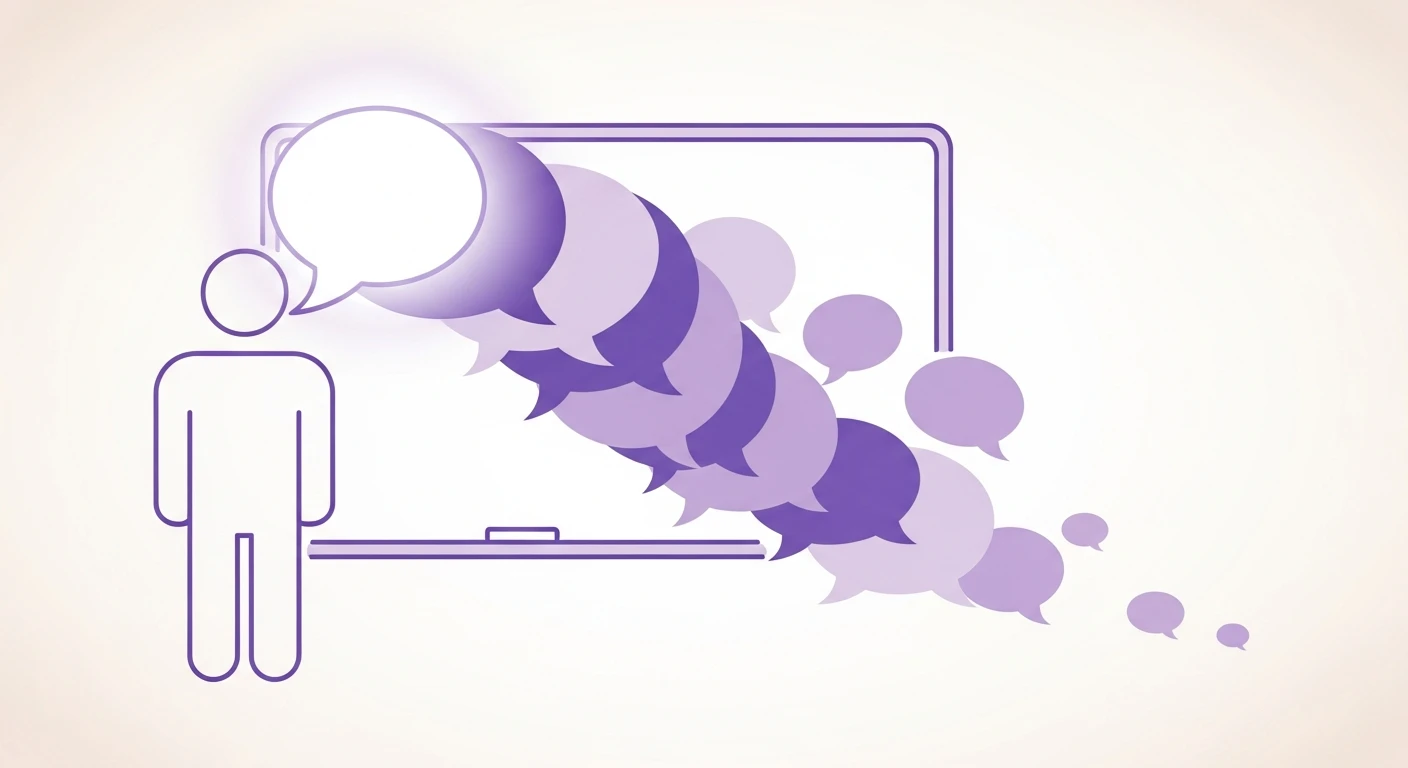
Watch a researcher review a transcript and you will notice something: analysis almost always starts at the first "real" question. The opening exchange -- the hellos, the small talk, the how-are-you-finding-the-weather -- gets skipped as preamble. It is treated as the runway, not the flight. But the participant does not experience it that way. By the time you ask your first substantive question, they have already been listening to you for five minutes, and they have already decided -- unconsciously -- what kind of conversation this is going to be, what register to speak in, and how much to disclose.
This is the warm-up contamination effect, and it is one of the most invisible sources of bias in qualitative research precisely because we have defined it out of the data. The warm-up is not a neutral prelude. It is the moment you calibrate the participant, and whatever calibration you set persists.
Why the Opening Sets the Register for Everything After
Human conversation is relentlessly adaptive. Within the first minute of talking to someone, we match their pace, formality, energy, and vocabulary. Participants do this to interviewers automatically. If you open bright, upbeat, and enthusiastic, they mirror it -- and then struggle to voice criticism twenty minutes later because you have established that this is a positive, agreeable conversation. If you open clinically and formally, they respond in the sophisticated, careful register they think you want, which is a close relative of the authority gradient, where participants match their response sophistication to the perceived status of the researcher.
The warm-up also seeds vocabulary. If you mention that the study is about "how you manage your busy schedule," the participant now frames their day as busy, whether or not they would have chosen that word. This is the vocabulary mirroring effect planted before the first question is even asked -- you have handed them the frame in the friendly chatter and they will speak from inside it for the rest of the session.
The Specific Ways Warm-Up Talk Contaminates
The rapport overcorrection
Researchers are trained that rapport is good, so they front-load warmth: lots of smiling, agreeing, validating. But rapport built on visible agreement teaches the participant that agreement is the currency of this conversation, and you have manufactured an agreeable respondent before you have asked anything worth disagreeing with. This is the interviewer warmth overcorrection beginning in the warm-up rather than mid-interview -- by minute six you have already made honest negative feedback socially expensive.
The topic pre-frame
"So today we're going to talk about how our checkout could be better." Said casually in the warm-up, that sentence tells the participant the product has problems and their job is to find them. Every subsequent answer now tilts negative, and you will read the resulting complaints as spontaneous when you seeded them yourself. This is assumption smuggling disguised as a friendly framing sentence.
The rehearsal invitation
Warm-up chatter that recaps what the participant will be asked gives them time to compose polished, pre-formed answers before recording their real reactions. It is a live version of the rehearsal effect, where telling participants the topic in advance manufactures rehearsed answers -- except here you do it yourself in the first two minutes.
Why AI Moderation Does Not Escape This
Teams adopting AI-moderated interviews often assume an automated opener is neutral. It is not -- it is just consistently biased. A scripted AI warm-up that greets every participant with the same enthusiastic framing applies the same contamination to every session, systematically rather than randomly. Consistency is not neutrality. And because the AI's warm-up is fixed, its priming is baked into the entire dataset, which compounds rather than cancels. Whatever frame the opener sets, AI summaries will later report the resulting patterns as consensus your participants never actually reached.
How to Open Without Stacking the Deck
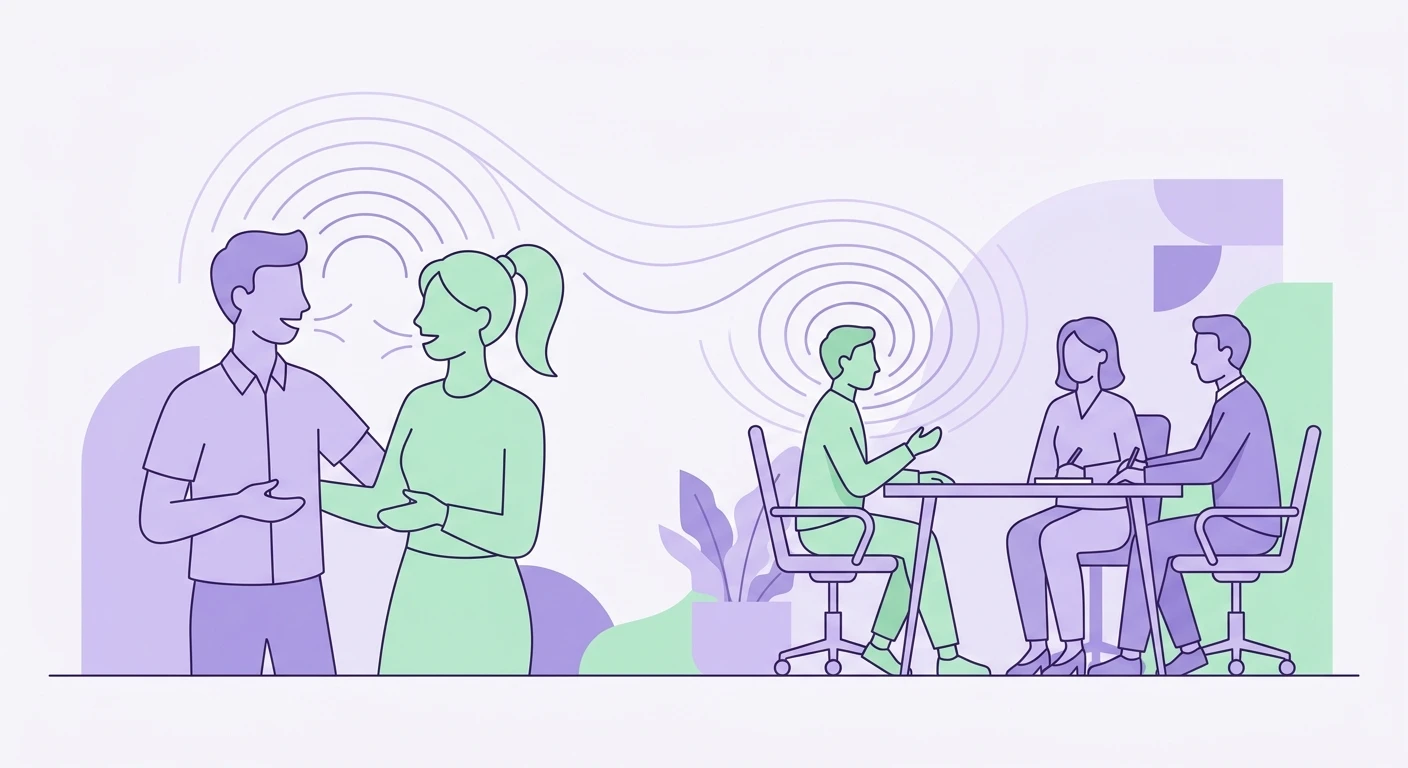
Separate connection from calibration. You still want the participant relaxed -- rapport reduces anxiety and improves disclosure. The fix is not to eliminate warm-up, but to make it topic-neutral. Talk about something genuinely unrelated to the study so you build comfort without seeding frames.
Never preview the thesis. Describe the session in the most neutral terms possible: "I'm going to ask you about some of your recent experiences, and there are no right answers." Do not name the product's suspected problems or the behavior you are hoping to see.
Set permission, not direction. The most useful thing to establish in the warm-up is that criticism is welcome and disagreement is useful -- explicitly. This counteracts the agreeableness the opening naturally breeds and preserves your ability to get honest signal, the way rapport without bias keeps warmth from becoming leading.
Analyze the warm-up. Include the opening minutes in your transcript and review them. If your own warm-up language shows up echoed in later answers, you have found your contamination -- and you can control for it in the next study.
The Bottom Line
The warm-up is data collection, not preamble. In the first five minutes you set the register, hand over the vocabulary, and teach the participant how agreeable to be -- and every answer after that is shaped by choices you made before you thought the interview had started. Treat the opening as part of your instrument. Design it to relax the participant without framing the topic, and code it alongside everything else. The most consequential bias in your study may be hiding in the part of the transcript you never read.
Ready to catch the priming your warm-up quietly plants? See how Qualz.ai surfaces framing and contamination across your interviews.