Strategy consulting has an interview problem. Not a methodology problem — the frameworks are sound, the analytical rigor is real, and the partners know exactly what questions to ask. The problem is operational: getting enough expert conversations done quickly enough to meet deal timelines without sacrificing the depth that makes qualitative due diligence valuable.
A typical commercial due diligence engagement requires 20-40 expert interviews completed in 2-4 weeks. A market entry study might need 30-50 conversations across multiple geographies. A customer perception study for a private equity client demands breadth across buyer segments and use cases — all before the investment committee meets.
The math does not work. It has never worked. Consulting firms have simply absorbed the inefficiency as a cost of doing business, hiring armies of associates to schedule calls, brief experts, conduct interviews, and synthesize notes. The result is a process that is simultaneously the most valuable part of the engagement and the most operationally painful.
AI-moderated interviews do not replace the strategic thinking that makes consulting valuable. They eliminate the scheduling, coordination, and capacity constraints that prevent firms from gathering the evidence base their strategic thinking deserves.
The Hidden Tax on Every Engagement
Before examining what changes with AI, it is worth quantifying what consulting firms actually spend on the interview process. These numbers are rarely tracked in isolation because the cost is distributed across associate hours, expert network fees, and overhead — but they are substantial.
Expert scheduling and coordination: For every completed interview, expect 4-7 touchpoints — initial outreach, scheduling, rescheduling (at least once), confirmation, briefing, and follow-up. An associate spending 15 minutes per touchpoint across 30 interviews is looking at 30-50 hours of pure logistics.
Expert network fees: Third-party expert networks charge $500-1,500 per completed call. For a 30-interview study, that is $15,000-$45,000 in network fees alone — before a single hour of consulting time is billed.
Interview execution: A manager or senior associate conducting 30 interviews at 45-60 minutes each, plus 15 minutes of prep and 15 minutes of post-interview notes, is committing 40-50 hours to the process. At typical consulting billing rates, that is $15,000-$30,000 in opportunity cost.
Scheduling bias: This is the cost nobody tracks. When you need 30 interviews completed in two weeks, you interview whoever is available in that window. The retired executive with nothing but time gets interviewed. The sitting CEO who could provide the most valuable perspective does not — because her assistant cannot find a 45-minute slot before your deadline. Your sample is shaped by calendar availability, not by who actually knows the most about the market.
Synthesis bottleneck: After interviews are complete, someone needs to read all the notes, identify patterns, resolve contradictions, and build the narrative. With 30 interviews producing 20-40 pages of notes each, the synthesis step alone takes 20-30 hours. This work often falls to the most junior person on the team — not because they are best suited for it, but because everyone else has moved on to the next workstream.
Total operational cost per engagement: 100-150 associate hours and $15,000-$45,000 in expert network fees, producing a sample that is biased toward whoever happened to be available during a two-week window.
What Changes With AI-Moderated Expert Interviews
The shift is not about replacing human judgment in due diligence — it is about removing the mechanical constraints that limit the evidence base on which that judgment operates.
Interviews Run on the Expert's Schedule
An AI-moderated interview is available whenever the expert is ready to engage. The supply chain executive traveling through Asia can complete her interview at 11 PM Singapore time. The portfolio company CEO can respond between meetings over two days. The retired industry veteran can take his time, providing the kind of reflective, detailed answers that a rushed 45-minute phone call never produces.
This asynchronous format does not just improve convenience — it fundamentally changes who participates. The most valuable experts are almost always the busiest. They are the ones who decline scheduled calls because they cannot commit to a specific hour three days from now. But they can commit to engaging with a thoughtful set of questions on their own time. The result is a sample that includes voices you would never reach through traditional scheduling.
Broader Samples Without Proportional Cost
When each additional interview does not require scheduling coordination, associate prep time, or expert network matching fees, the economics of sample size change completely.
A traditional 30-interview study becomes a 60-interview study at marginal additional cost. A market entry study that previously covered three competitor segments can cover six. A customer perception study that interviewed buyers from ten accounts can reach thirty.
This is not just about volume — it is about the kind of structured qualitative data that transforms research budgets from cost centers into strategic assets. When your sample is large enough, you stop relying on anecdotes and start identifying statistically meaningful patterns in qualitative data. You can say "14 of 20 enterprise buyers cited implementation complexity as the primary switching barrier" instead of "several experts mentioned implementation challenges."
Consistent Probing Across Every Interview
Human interviewers — even excellent ones — drift over the course of a 30-interview study. The probing questions in interview 5 are different from interview 25. Fatigue, time pressure, and unconscious anchoring to early findings mean that later interviews often confirm rather than challenge emerging hypotheses.
AI-moderated interviews apply the same follow-up logic to every expert. When someone mentions a market dynamic, the system probes for specifics, asks for examples, and explores implications — every time, with every expert. The consistency that eliminates moderator bias is not just methodologically cleaner. It produces findings that hold up under scrutiny when the investment committee pushes back.
Real-Time Adaptive Depth
The most sophisticated AI interview systems do not follow a fixed script. They adapt based on the expert's responses — probing deeper when someone mentions an unexpected competitive dynamic, exploring implications when an expert flags a regulatory risk, and connecting themes across different parts of the conversation.
This adaptive capability means that a supply chain expert who mentions a capacity constraint in passing gets asked to quantify it, explain the timeline, and assess the impact on pricing — the same follow-up a skilled partner would pursue in a live conversation. The difference is that the AI applies this probing depth to every interesting thread in every interview, while even the best human interviewer has to make real-time triage decisions about which threads to follow.
Where This Matters Most
Commercial Due Diligence Under Deal Timelines
Private equity deal timelines are measured in weeks. The firm that can complete 50 expert interviews in five days instead of 30 interviews in three weeks does not just deliver faster — they deliver a fundamentally different product. More voices means more confidence in market sizing, competitive positioning, and growth assumptions. The investment committee gets a recommendation backed by a defensible evidence base rather than a narrative built on a thin sample.
The difference between research that sits unanalyzed and research that drives decisions often comes down to whether the timeline allowed for sufficient depth. AI interviews eliminate the tradeoff between speed and thoroughness.
Market Entry and Competitive Intelligence
Market entry studies require breadth — interviews across buyer segments, geographies, regulatory environments, and competitive contexts. Traditional approaches force painful prioritization: do we cover all three target markets with shallow interviews, or go deep on one market and extrapolate?
AI-moderated interviews remove this constraint. Deploy interviews across all target segments simultaneously. Adapt the interview guide for each segment — different language, different follow-up logic, different areas of depth. Collect responses asynchronously over five days rather than scheduling sequentially over five weeks.
The resulting analysis does not just identify market opportunities — it maps them with the kind of granularity that supports concrete go-to-market recommendations. When your evidence base includes voices from every target segment, your market entry strategy is built on observed patterns rather than assumed ones.
Customer and Channel Partner Research
Understanding how customers actually experience a target company's product — and how channel partners position it relative to alternatives — is critical for due diligence but notoriously difficult to do well at speed. Customers are hard to schedule. Channel partners are guarded.
AI interviews lower the participation barrier. A 15-minute asynchronous conversation about product experience is a much smaller ask than a scheduled 45-minute phone call. Response rates increase, sample breadth improves, and the resulting data captures perspectives from customers and partners who would never agree to a traditional expert call.
From Expert Interviews to Strategic Intelligence
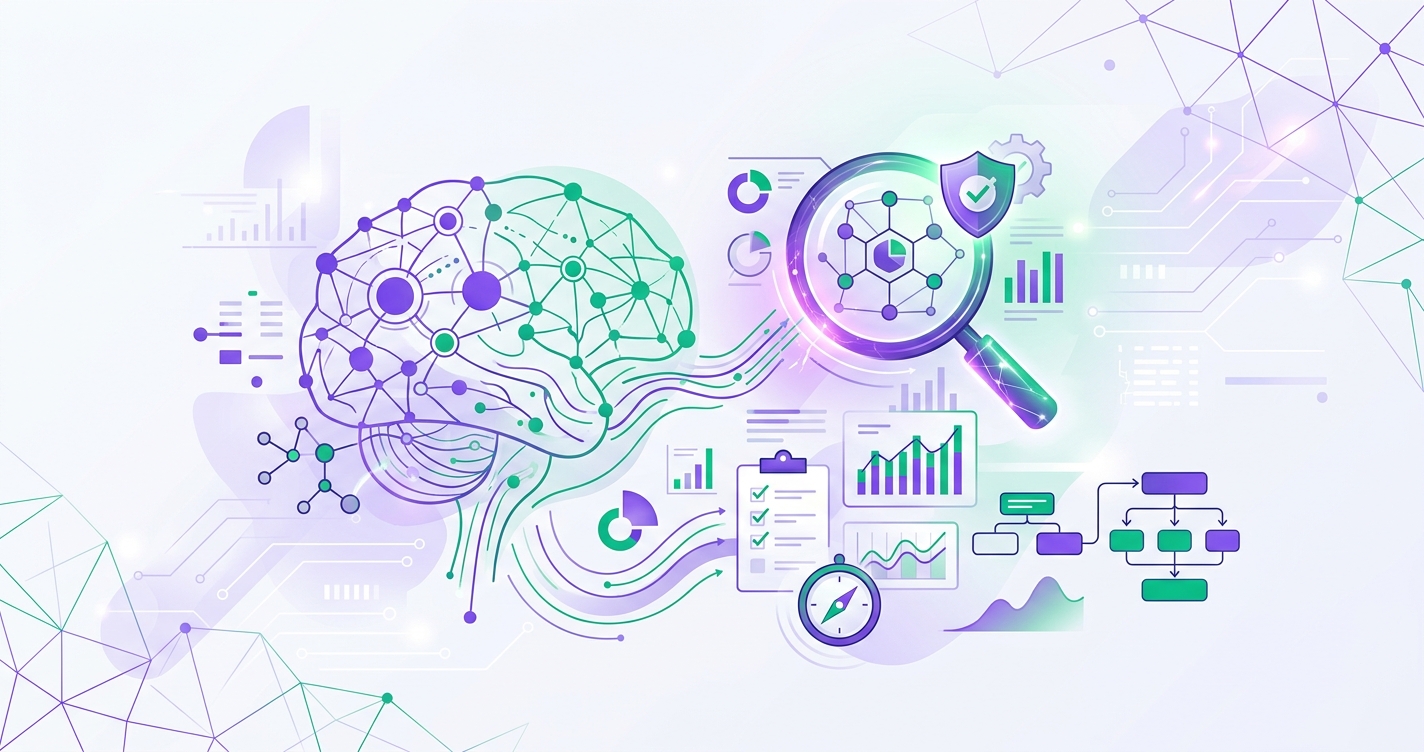
The real transformation is not just faster interviews — it is what becomes possible when interview data flows directly into structured analysis. When 50 expert interviews are conducted through a platform like Qualz, the transcripts are immediately available for multi-lens analysis that would take a team of associates days to replicate manually.
Apply a competitive dynamics lens to identify how experts describe market positioning. Apply a Jobs-to-Be-Done framework to understand buyer decision criteria. Apply a stakeholder equity lens to surface whose perspectives dominate the narrative and whose are absent. Each analytical lens produces a different cut of the same data — and the combination produces the kind of strategic intelligence that transforms stakeholder interviews into actionable insight.
The Competitive Advantage Is Temporary
Strategy consulting firms that adopt AI-moderated interviews now gain an immediate advantage: more evidence, gathered faster, at lower cost, with less scheduling bias. Their due diligence reports are more defensible. Their market entry recommendations are better grounded. Their client delivery timelines compress without sacrificing quality.
But this advantage will not last. Within 18-24 months, AI-moderated expert interviews will be standard practice in strategy consulting. The firms that move first will have refined their approach, built institutional knowledge about designing effective AI interview guides, and established workflows that integrate AI-gathered evidence into their existing analytical frameworks.
The firms that wait will be playing catch-up — not just on the technology, but on the institutional capability to use it effectively.
Book an information session to see how AI-moderated interviews can compress your due diligence timelines while expanding your evidence base. Bring a current engagement where you need more expert conversations than your timeline and budget allow. That is exactly the problem we solve.