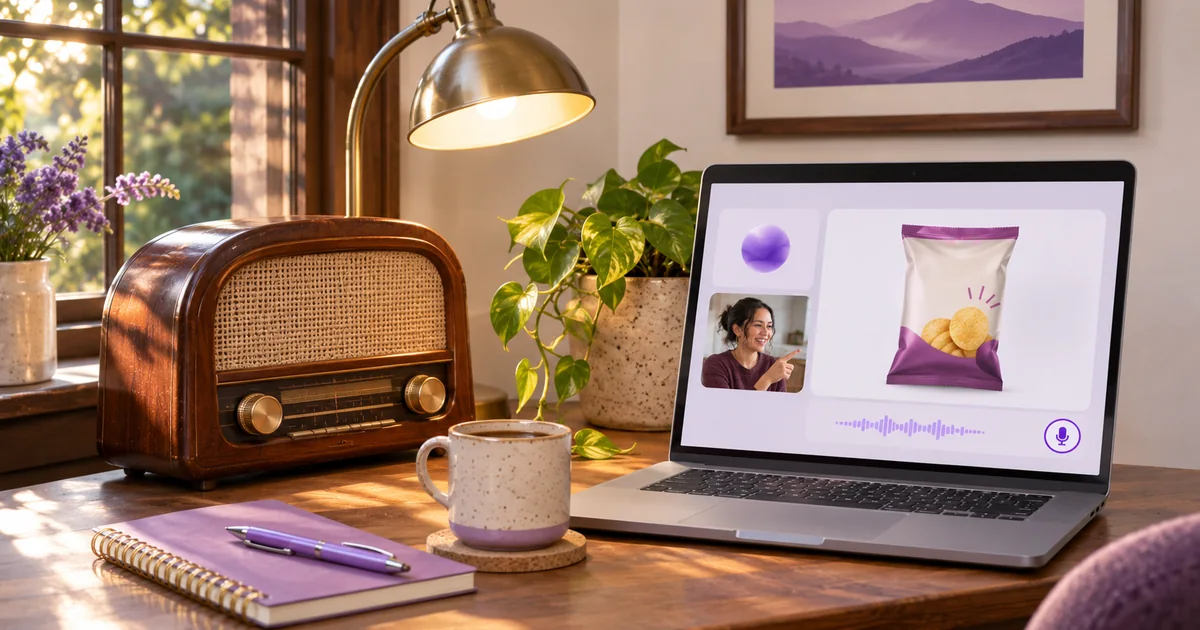
The idea hasn't changed since: show people something, then ask about it. What has changed is what people are shown and how the conversation reaches them. For the method itself, see what a stimulus-based interview is.
Who invented focus groups?
The focus group began as a way to explain what a machine had measured. Paul Lazarsfeld and Frank Stanton's program analyzer let about ten listeners press a red button when a radio program bored them and a green one when they liked it. The machine showed when people reacted, and the group discussion afterwards showed why (Jeřábek, 2011).
In 1941, their first year together at Columbia University, Lazarsfeld took Robert K. Merton to one of these tests, and Merton passed him notes on what the moderator was getting wrong. Those notes became the focused interview, and its core idea still holds: study the material first, so your questions can go after specific moments in it. Merton and Patricia Kendall published the method in 1946 (Merton and Kendall, 1946), and Herta Herzog did much to bring it to market researchers as the focus group (Tadajewski, 2016).
How did other stimuli find their way into interviews?
Each field that took up the idea found its own thing to show, and the choice always followed the question. Psychologists wanted what people couldn't put into words, so they used inkblots, starting with Rorschach's test in 1921 (Teles, 2020). Marketers borrowed these projective techniques in the 1950s, because people asked directly why they buy something tend to give the sensible answer (Haire, 1950).
Teachers wanted to know what students had been thinking in the moment, so in 1953 Benjamin Bloom played recordings of classes back to them, and that became stimulated recall (van Braak et al., 2018). Anthropologists wanted families to talk without feeling interrogated, and John Collier's photographs did that in 1957 by giving the interview "a second subject" (Collier, 1957).
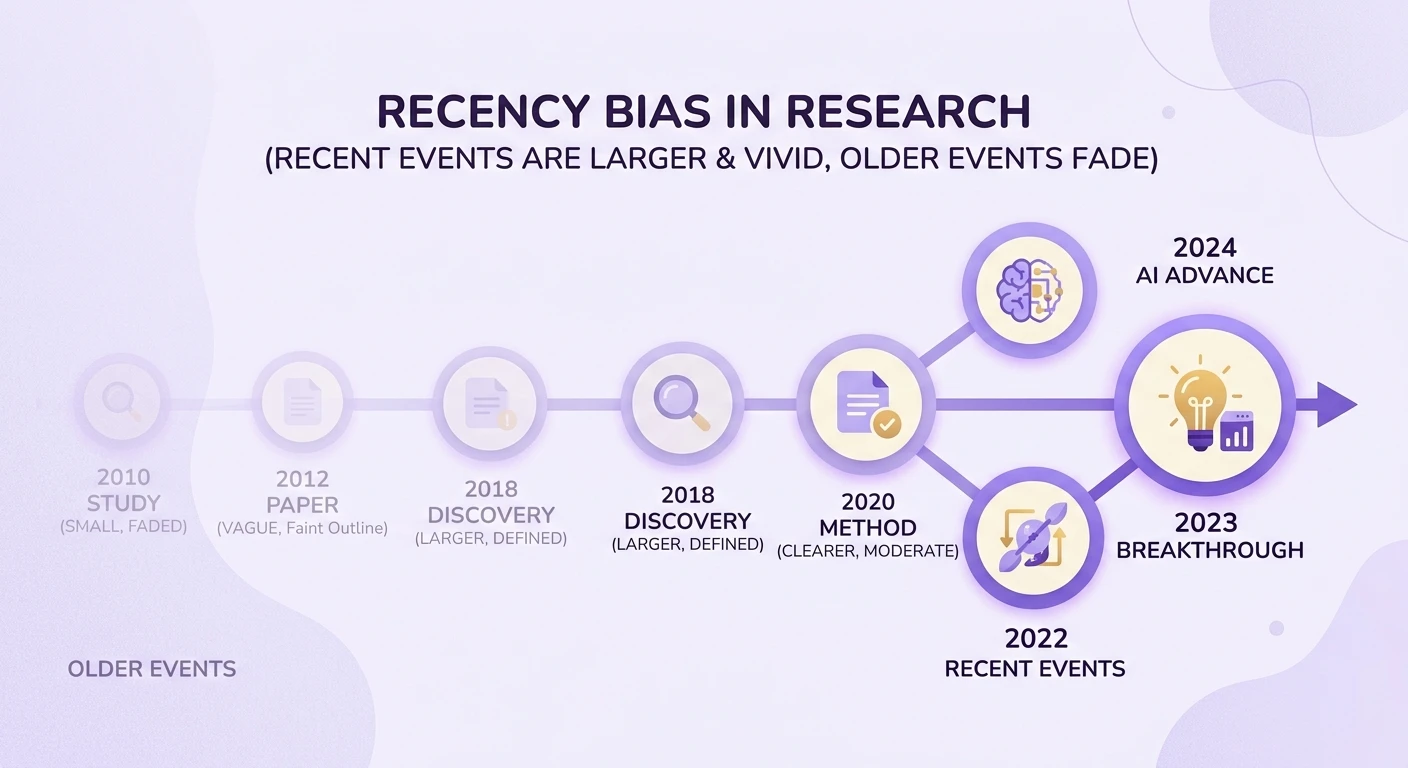
Sociologists later added vignettes for sensitive topics (Finch, 1987), and each of these is now a method of its own. We compare them in types of stimulus-based interviews, and the timeline below shows how they line up.
| Year | What people were shown | Field |
|---|---|---|
| 1921 | Inkblots | Psychology |
| 1941 | Radio programs, then films | Communication research |
| 1950 | Projective tests | Market research |
| 1953 | Recordings of their own classes | Education |
| 1957 | Photographs | Anthropology |
| 1987 | Written scenarios (vignettes) | Sociology |
| 1997 | Text-based online focus groups | Online research |
| 2020 | Stimulus shared on video calls | Remote research |
| 2020s | Stimulus shown by an AI moderator | AI-moderated interviews |
How did stimulus-based interviews move online?
Twice, and the first attempt lost the stimulus. Text-based focus groups were running on email lists by 1997 (Gaiser, 1997), but text produced far less data than in-person or video sessions (Namey et al., 2020).
Video put the stimulus back on the screen, and participants liked it: most nurses in one study rated Zoom above meeting in person (Archibald et al., 2019). COVID-19 then made video the default. Every session still needed a moderator and a time both people could make, though.
What does AI change?
AI removes that bottleneck. An AI moderator works through the guide, shows each stimulus when the guide calls for it, and runs whenever the participant is ready, so many interviews can happen at once.
The evidence so far is promising, with one limit. An AI chatbot drew better answers than a standard online survey (Xiao et al., 2020), but AI interviewers often miss the right follow-up question (Wuttke et al., 2025). That's why a well-built discussion guide still decides the quality.
How does Qualz.ai support stimulus-based interviews today?
In Qualz.ai, you attach stimulus images to the questions in your guide, and the AI moderator shows each one just before asking about it. Each image comes with a private note that tells the moderator what it shows and what you want to learn.
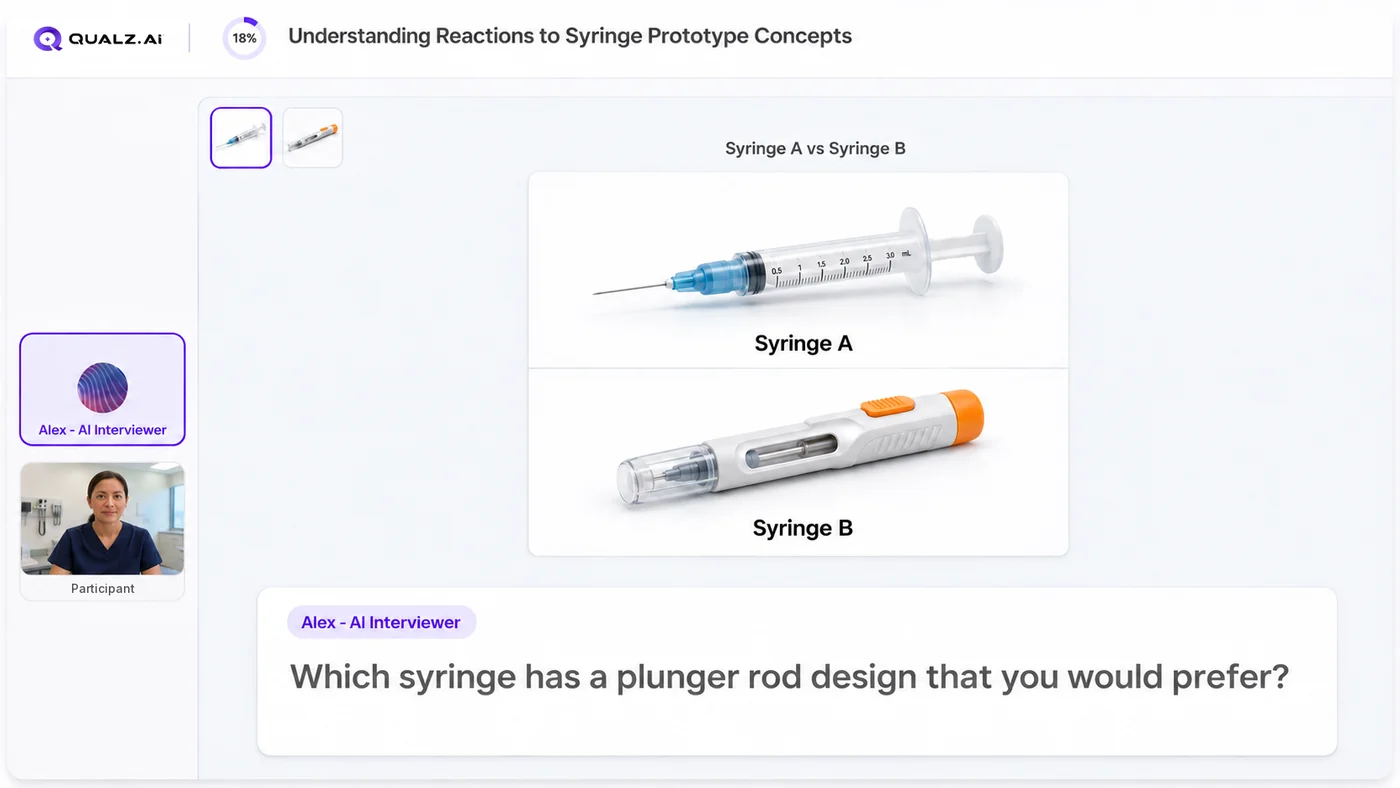
A video or PDF everyone must see first can go on the Pre-Interview Stimulus Screen, images can also sit beside survey questions, and AI analysis finds the themes afterwards. Before you go live, take the interview yourself through the preview link to check each image appears at the right moment.
One pharmaceutical manufacturer used it to test a multi-million-dollar product decision, with findings from 155 interviews in 28 days instead of 14 to 20 weeks (read the case study). If you're moving a stimulus study online for the first time, book a call and we'll help you set it up.
Frequently asked questions about the history of focus groups
What is a focused interview?
An interview about something the participant has already seen or heard, such as a film or a radio program, which the researcher has studied beforehand. Robert K. Merton and Patricia Kendall described it in 1946.
When did photo elicitation start?
In 1957, when John Collier used photographs in his interviews. It's still one of the most common types of stimulus-based interview.
Can AI conduct qualitative interviews?
Yes. Studies find AI interviewers can collect good-quality answers, though they can miss follow-up questions, so the interview guide still matters.
Ready to run your next stimulus-based interview?
Book a call, and we'll show you how a stimulus study runs with an AI moderator.