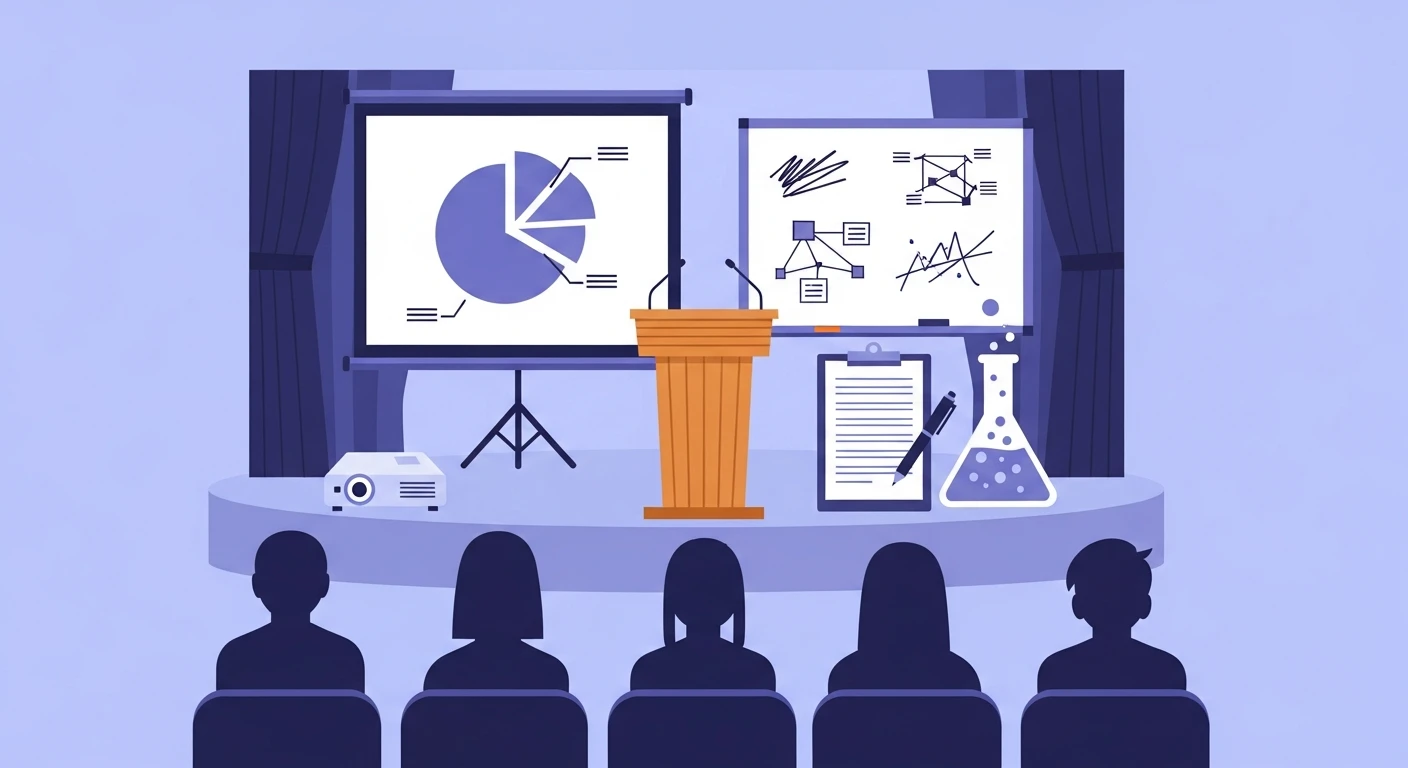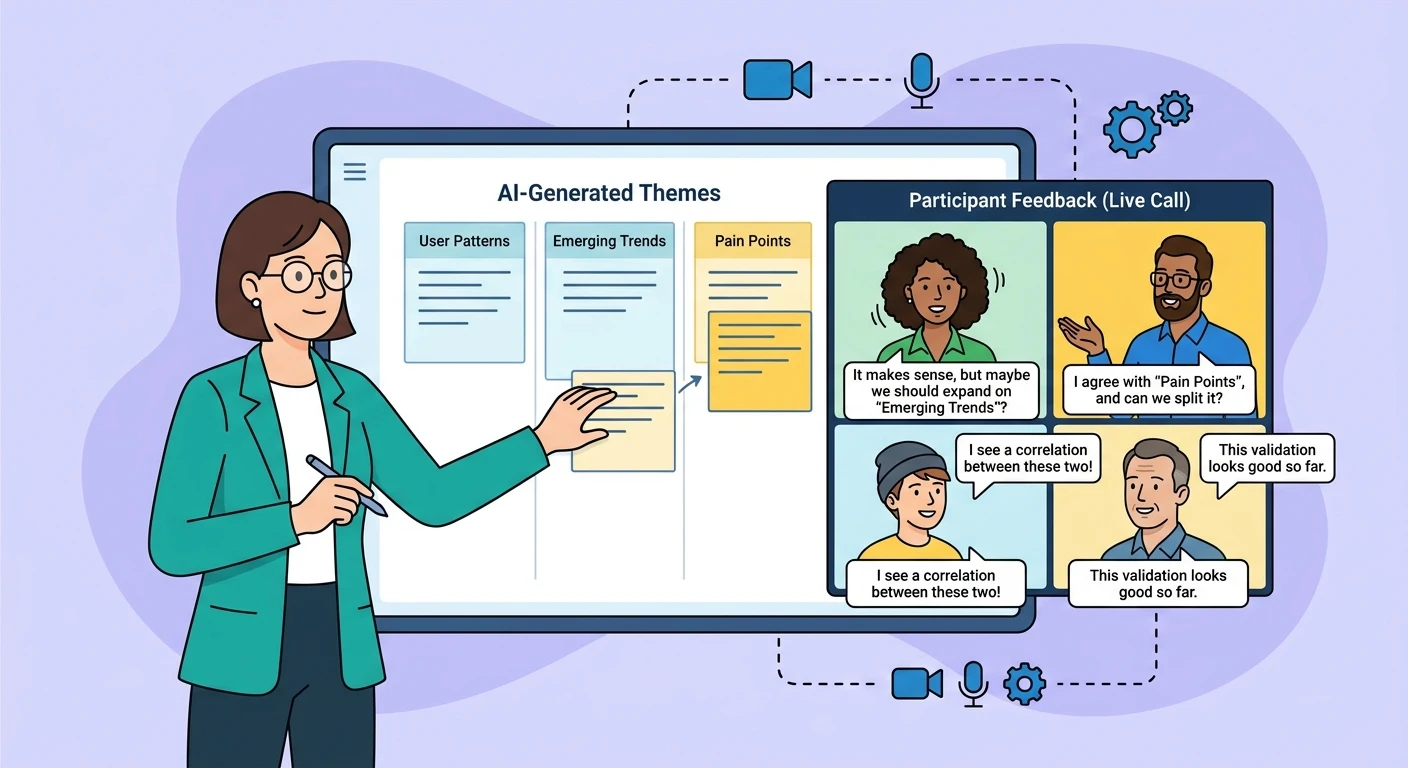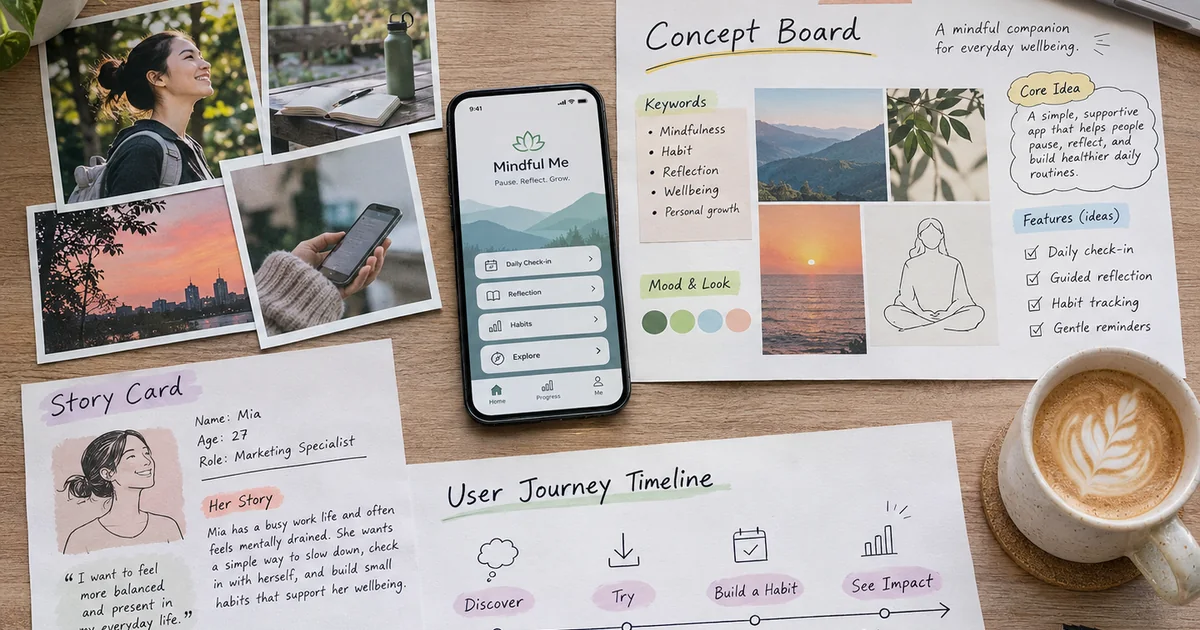
They all grow from the same method, the stimulus-based interview, and they add to a normal interview rather than replace it (Kahlke et al., 2025). The quickest way to tell them apart is to ask what you're showing, and what you want people to do with it. The table sorts the eight by exactly that, and if you're not sure you need a stimulus at all, start with when to use a stimulus-based interview.
| Technique | What you show | Best for |
|---|---|---|
| Photo elicitation | Photographs | Memories, feelings, everyday life |
| Concept testing | A concept board or statement | Early reactions to an idea |
| Prototype testing | A mockup or early version | Whether people understand it and can use it |
| Vignette interview | A short story about a made-up person | Views on norms and sensitive topics |
| Stimulated recall | A recording of the participant's own activity | Decisions made in the moment |
| Projective techniques | An ambiguous prompt | Motives people can't or won't say directly |
| Visual elicitation | Diagrams, maps or timelines | Relationships and change over time |
| Object elicitation | A physical object | What things mean to people |
What is photo elicitation?
You show photographs and ask people what they see, remember and feel. It suits everyday subjects, because photos draw out feelings and memories that words alone often miss (Harper, 2002). Our photo elicitation interview questions show how to run one.
What is concept testing?
You show an idea before it exists, usually as a board with a picture, a name and a few lines on what it does. Boards range from rough sketches to near-finished ads (AQR), and the choice matters: rough invites people to shape the idea, polished shows how they react on first sight.
What is prototype testing?
You show a version of the product, from a sketch to a working build, and watch whether people understand it and can use it. Any representation of the design counts as a prototype (Houde and Hill, 1997), and asking people to think aloud as they use it is one of the most common ways to run the session (Boren and Ramey, 2000).
What is a vignette interview?
You tell a short story about a made-up person and ask what they should do next. It's the one to reach for on sensitive topics, because people can answer in the third person instead of sharing their own story (Kahlke et al., 2025).
What is a stimulated recall interview?
You play back a recording of something the participant did, such as a consultation or a lesson, and ask what they were thinking at each point. It gets closest to the reasoning behind a real decision, as long as you do it soon after the event (Lyle, 2003).
What are projective techniques?
You give people something open-ended to interpret, like a sentence to finish or the kind of person who'd buy a product. Because they answer about someone else, they can voice views they'd hesitate to own (SAGE).
What is visual elicitation?
You show, or ask people to draw, a diagram, map or timeline. It suits questions about how things connect or change, and drawing can bring up things that are hard to get any other way (Crilly et al., 2006).
What is object elicitation?
You ask people to bring or hold an object that matters to them, such as a product they use every day, and talk about it. Holding a thing brings out the stories attached to it, and objects are one of the 13 kinds of elicitation in a 2025 review (Kahlke et al., 2025).
How does Qualz.ai support these techniques?
Qualz.ai works with any technique where you choose the stimulus: attach photos, concept boards, prototype screenshots or diagrams as stimulus images to the questions in your guide, or write a vignette or projective prompt into the question itself. Each image comes with a private note that tells the moderator what it shows and what you want to learn. Stimulated recall needs each participant's own recording, so it's better run another way.
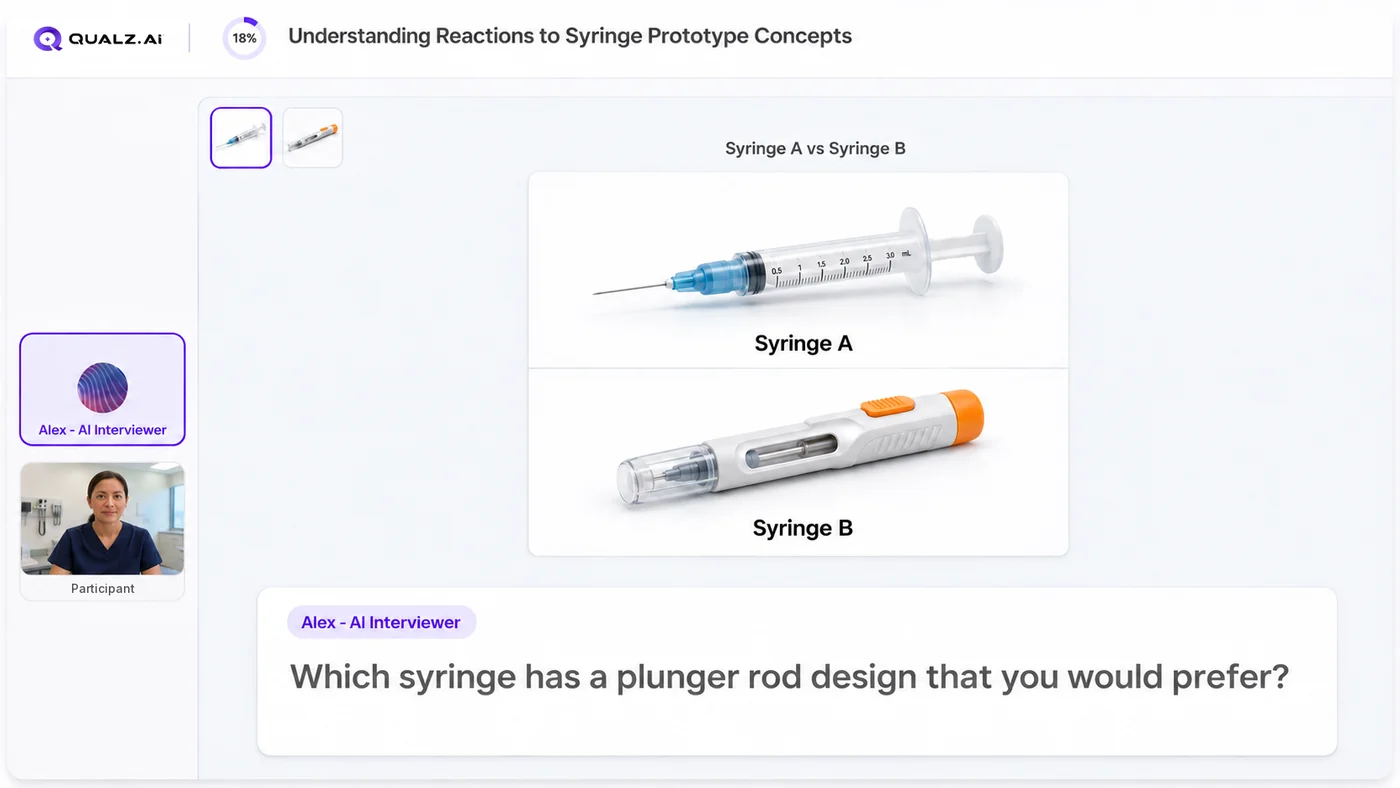
A video or PDF everyone must see first can go on the Pre-Interview Stimulus Screen, images can also sit beside survey questions, and AI analysis finds the themes afterwards. Before you go live, take the interview yourself through the preview link to check each image appears at the right moment.
One pharmaceutical manufacturer used it to test a multi-million-dollar product decision, with findings from 155 interviews in 28 days instead of 14 to 20 weeks (read the case study). Book a call if you'd like help choosing the right technique for your study.
Frequently asked questions about elicitation techniques
What is the difference between photo elicitation and photovoice?
Photo elicitation is an interview method that uses photos as prompts. Photovoice is a wider research approach where participants take photos to document their lives and push for change (Bugos et al., 2014).
What are stimulus materials?
Anything you show participants to react to, such as images, concept boards, mockups or video. In market research, stimulus material is "used to communicate certain ideas to enable them to be researched" (AQR).
Is concept testing qualitative or quantitative?
It can be either. A quantitative concept test "evaluates responses to a number of concepts and estimates the size of the market opportunity" (AQR), while a qualitative one explores why people react the way they do.
Ready to try one of these techniques?
Book a call and we'll help you set up your first one.