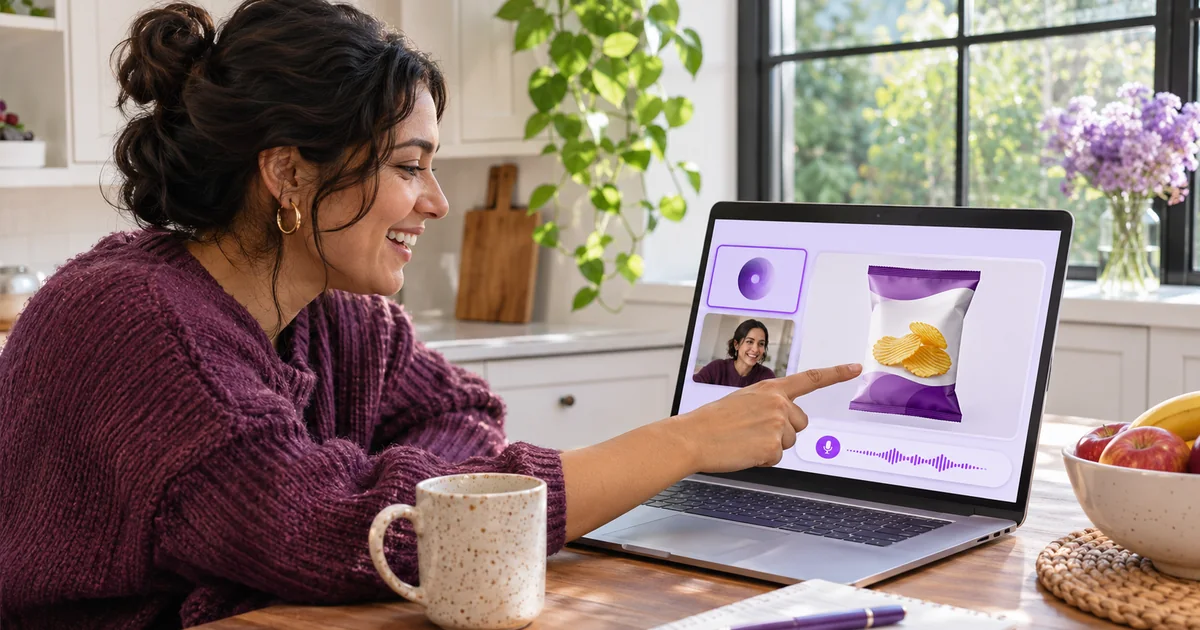
Most people aren't short of opinions. They're short of something to point at. Stimulus fills that gap, which is why researchers use it to draw out richer data (Riard and Kaur, 2022). The method itself is explained in what a stimulus-based interview is.
Why use stimulus material in an interview?
Showing people something changes an interview in six ways. Some make the answers richer, some make the interview easier for the participant, and the best stimulus does both. Here's each one, with the research behind it.
- It makes the conversation concrete. An idea described in words means something different to everyone who hears it. Show the thing itself, and everyone reacts to the same design. Photos, films, ads and sketches all work as prompts that get people talking about the topic (Törrönen, 2002).
- It brings out longer, more detailed answers. A picture gives people more to talk about. When John Collier interviewed families with and without photographs in 1957, the photo interviews were more precise and more complete (Collier, 1957). It's a milestone in the history of stimulus-based interviews.
- It brings back memories. Memory works on cues, and a question is a weak one. A photo of a kitchen brings back a morning routine in a way a question about mornings can't (Epstein et al., 2006).
- It gives both of you the same thing to talk about. Questions alone can feel like a test. With an image on the table, the interview becomes a conversation about something you can both see (Harper, 2002), which can also narrow the gap in power between you (Van Auken et al., 2010).
- It helps people who find words hard. Young children, people with low literacy and people with memory problems often say more about a picture than in answer to a question. In a study with people living with dementia, photo prompts made direct questions and recall easier (Conway et al., 2025).
- It gives people distance on sensitive topics. People will say what they think about someone else's situation before they'll talk about their own. A short story about a made-up person gives them that room (Barter and Renold, 1999).
Does stimulus always help?
No. A stimulus is a strong prompt, so a poor one does as much harm as a good one does good. Images can close a conversation down as well as open it up (Meo, 2010).
How you show it matters too. People go easy on a design shown on its own, criticizing it less than one shown among alternatives (Tohidi et al., 2006). We cover where a stimulus gets in the way in when to use a stimulus-based interview.
How does Qualz.ai support stimulus-based interviews?
In Qualz.ai, you attach stimulus images to the questions in your guide, and the AI moderator introduces each one, checks the participant can see it, and keeps it on screen while they answer. Each image comes with a private note that tells the moderator what it shows and what you want to learn.
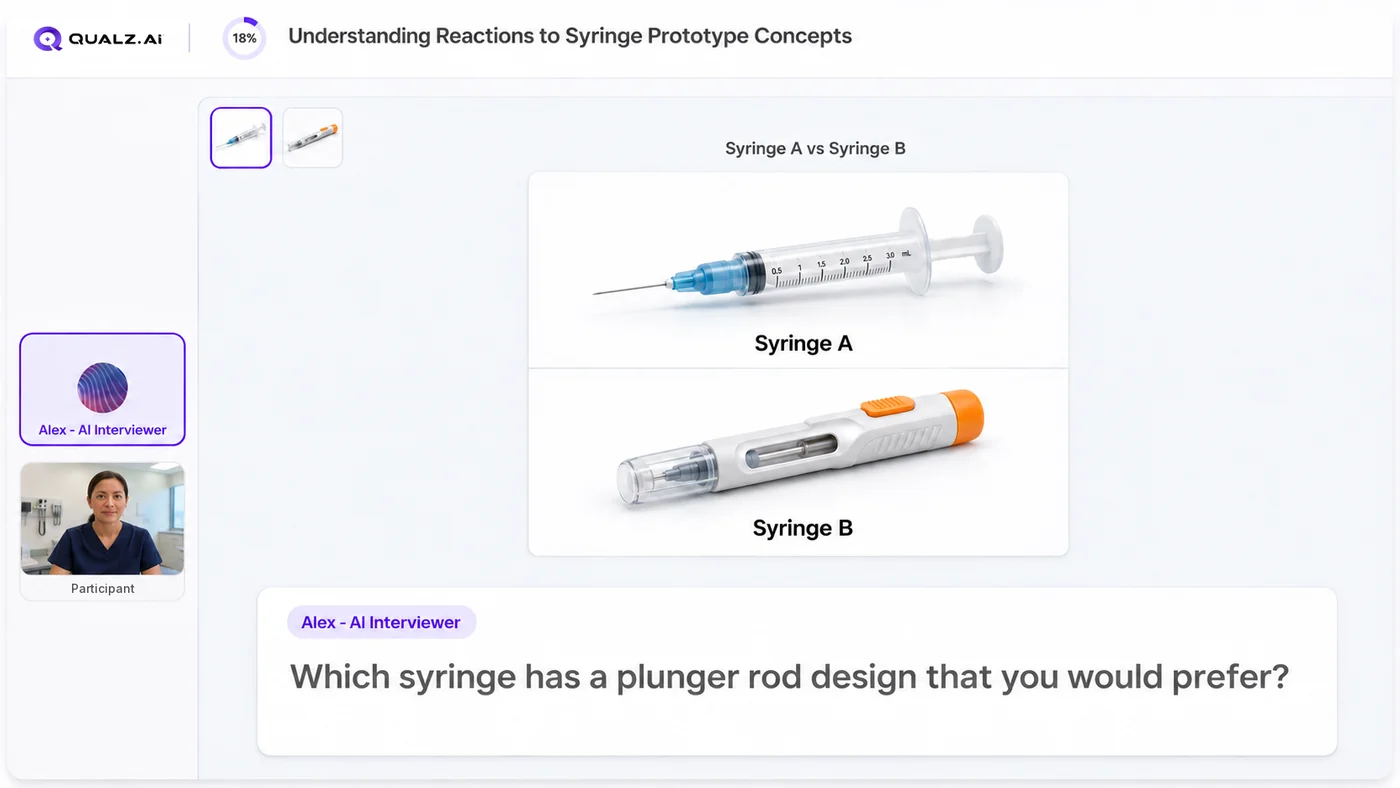
A video or PDF everyone must see first can go on the Pre-Interview Stimulus Screen, images can also sit beside survey questions, and AI analysis finds the themes afterwards. Before you go live, take the interview yourself through the preview link to check each image appears at the right moment.
One pharmaceutical manufacturer used it to test a multi-million-dollar product decision, with findings from 155 interviews in 28 days instead of 14 to 20 weeks (read the case study). Book a call and we'll help you pick stimulus that gets people talking.
Frequently asked questions about stimulus material
What does stimulus material mean?
It's anything you show participants to react to. The AQR defines it as material "of a visual, verbal and/or auditory nature used to communicate certain ideas to enable them to be researched, or to stimulate discussion of relevant topics" (AQR).
What are the benefits of photo elicitation?
Photos bring back memories, lead to longer and more detailed answers, and give you and the participant the same thing to talk about.
Why use vignettes in research?
Vignettes let people talk about a sensitive subject through a made-up character, so they can share their views without having to share their own story.
Ready to put stimulus into your next interview?
Book a call, and we'll look at your stimulus with you before you go live.