Below are the five situations where showing something helps most, the four where it gets in the way, and a quick check you can run on your own study. For the basics of the method, see what a stimulus-based interview is.
When does a stimulus-based interview work best?
A stimulus earns its place when it does something words can't: it shows what doesn't exist yet, gives shape to an abstract idea, or makes it easier for people to say what they think. In practice, that comes down to the five situations below, and each has its own technique, which we compare in types of stimulus-based interviews.
- You're testing something that doesn't exist yet. A new pack, ad or name is hard to judge from a description, because people fill the gaps with their own picture. Unmade ads are researched with rough material for this reason: their effect depends on how they'll finally look (AQR).
- The topic is abstract. Ideas like trust or a brand's personality are hard to put into words on the spot. A photo gives people something to hang them on, and makes abstract ideas easier to talk about (Hurworth, 2003).
- Your participants find words hard. Young children and people with low literacy often know what they think but struggle to say it when asked. For very young children, language limits what a researcher can even ask (Epstein et al., 2006). It doesn't suit everyone, though: in a dementia study, it helped some participants but not all (Phillipson et al., 2023).
- The subject is sensitive. People open up more easily about someone else's situation than their own. A short story about a made-up person gives them that distance (Barter and Renold, 1999).
- You want to know why someone made a decision. Asked later, people explain their decisions with reasons that sound good afterwards. Playing back a recording of the moment brings back what they actually thought, especially soon after (Lyle, 2003).
When should you avoid one?
A stimulus can also get in the way. Some of the situations below rule it out completely, while others only change how and when you show it, so check your study against each one before you plan the guide.
- You need people's first, unprompted views. Once people have seen your concept, their answers carry your framing. That's why research guidance asks researchers not to lead participants, and to note which answers were prompted (MRS, 2024). If unprompted views are all you need, leave the stimulus out. If you need both, ask first, then show.
- Your stimulus is too rough, or shown alone. People are generous with early designs, and rate rough prototypes as better-looking than they are (Sauer and Sonderegger, 2009). They also criticize a design less when it's shown on its own (Tohidi et al., 2006), so show more than one option.
- People can't relate to what you've picked. A stimulus only works if people recognize their own lives in it. Researchers who picked photos for their participants found the choice shaped the results (Platzer et al., 2021).
- You need numbers. An interview tells you why people react the way they do, not how many of them do. To measure how many people prefer one design, run a survey alongside the interviews, or instead of them.
Should your study use a stimulus?
If you're still unsure, start from the question you need answered rather than the material you have. Here's how a few common research questions translate into a decision.
| If your question is | Then |
|---|---|
| What do people think of our new pack design? | Show the pack |
| What comes to mind when people think of our category? | Ask first, then show |
| How many people prefer design A to design B? | Use a survey |
| How do nurses decide when to call a doctor? | Try a vignette |
| Which of three ad ideas works best, and why? | Show all three, rotating the order across participants |
Where each stimulus goes in the interview matters as much as whether you use one. Our guide on how to include stimulus in a discussion guide covers it step by step.
How does Qualz.ai support stimulus-based interviews?
In Qualz.ai, you attach stimulus images only to the questions that need them, so the interview can open with unprompted questions and show the stimulus later. Each image comes with a private note that tells the moderator what it shows and what you want to learn.
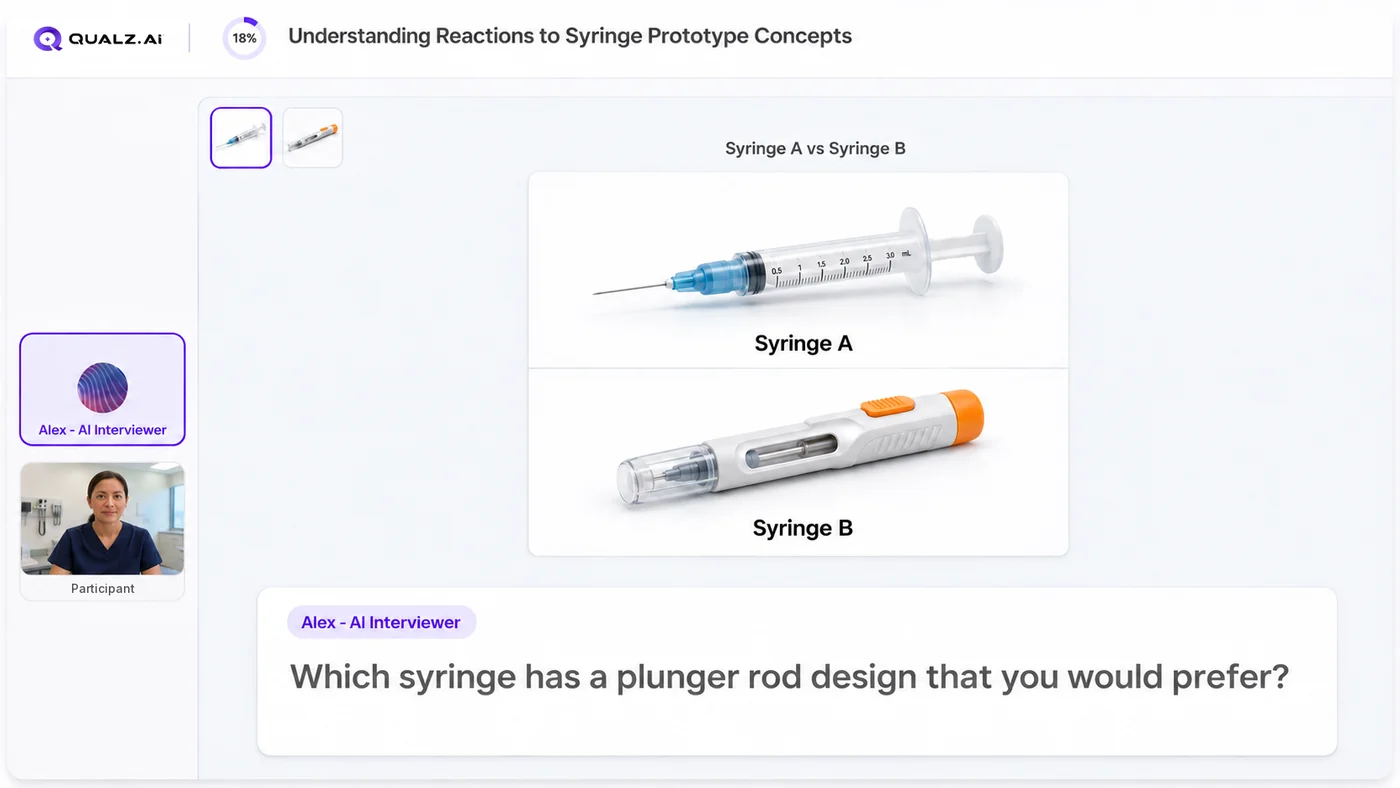
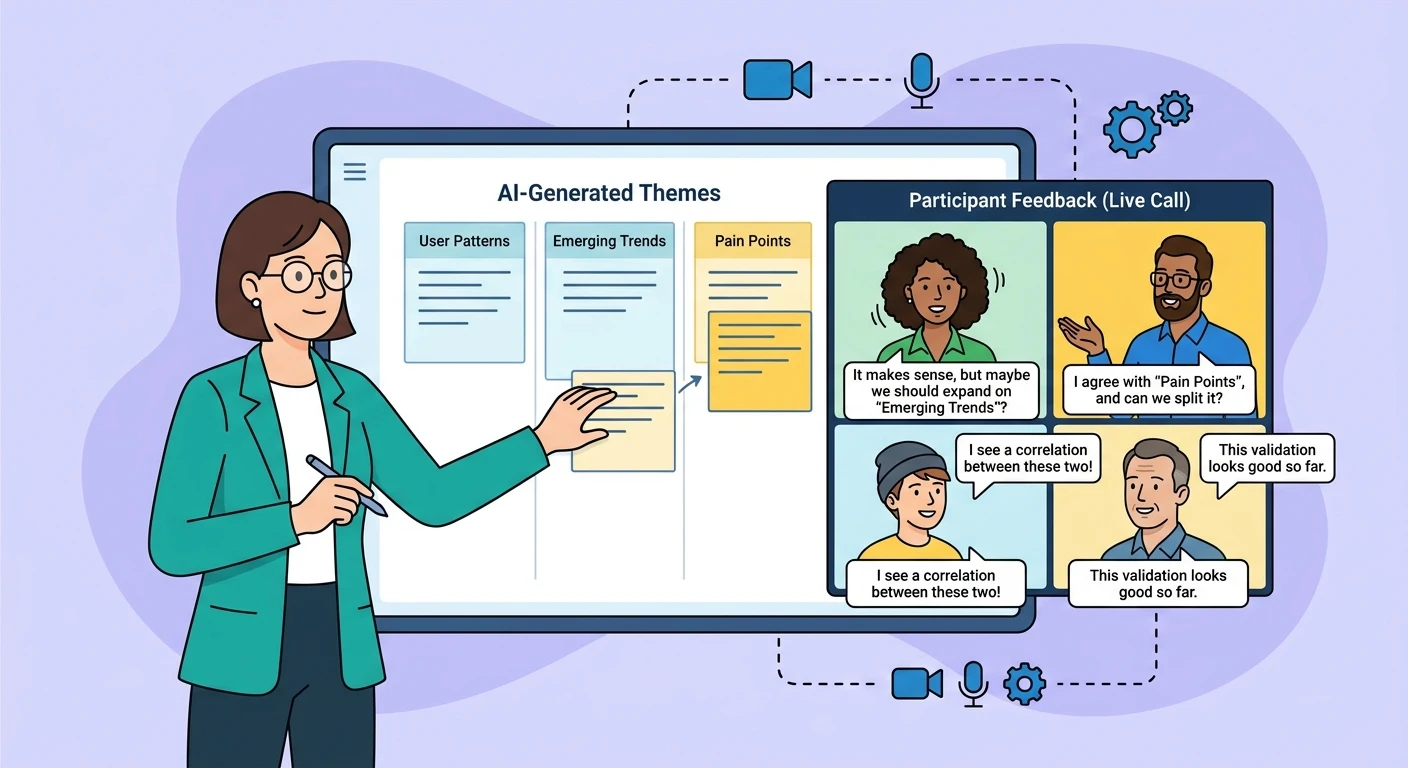
A video or PDF everyone must see first can go on the Pre-Interview Stimulus Screen, images can also sit beside survey questions, and AI analysis finds the themes afterwards. Before you go live, take the interview yourself through the preview link to check each image appears at the right moment.
One pharmaceutical manufacturer used it to test a multi-million-dollar product decision, with findings from 155 interviews in 28 days instead of 14 to 20 weeks (read the case study). Book a call if you're not sure a stimulus fits your study, and we'll talk it through.
Frequently asked questions about when to use stimulus
What are the advantages and disadvantages of photo elicitation?
Photos often lead to longer interviews and bring up topics you wouldn't have thought to ask about. But they take time to choose, and in one study they sometimes "did hamper communication" (Meo, 2010).
Should you show the stimulus before or after your questions?
After your open questions. Ask what people think and do first, then show the stimulus, so their first answers aren't shaped by it.
Can you use a stimulus-based interview with children?
Yes. Pictures help children say things they'd struggle to put into words, which makes stimulus one of the more useful tools for interviewing them.
Ready to plan your stimulus-based interview?
Book a call and we'll look at your research question with you.